Wood Flooring in Buena Park, Restored or Installed Right

We sand, repair and lay hardwood in Buena Park homes, measuring moisture first and putting every price in writing.

Buena Park Wood Flooring has spent 20+ years sanding, repairing and installing hardwood floors in Buena Park, CA. We refinish worn oak, rebuild water-damaged and slab-leak floors, repair subfloors, lay new solid and engineered hardwood, and fit stair treads and risers one step at a time.

Most of our work happens in houses people are still living in, so the job is planned around them. Moisture is measured and written down before material is ordered, dust is contained, and every estimate is itemized so a homeowner, landlord, buyer or insurance adjuster can read exactly what is being done and what each part costs.

The houses shape the work. The 1950s were Buena Park’s biggest building decade, with 9,097 of the city’s 24,877 housing units, and most owners live in detached houses from that era. That means oak strip hiding under carpet, old parquet and floor tile set in adhesive that deserves a test before anyone sands it, and floors that need a moisture reading before new wood goes down.

Get Your Free Quote

Fast response • No obligation

So we can reach you about your request.

So we can send you a confirmation after you submit this inquiry form.

  • 20+ Years in Wood Flooring
  • Itemized Written Estimates
  • Lead-Safe Sanding

What we do

Our Services

Wood flooring refinishing, repair and installation in Buena Park, CA

Worker drum-sanding red oak strip flooring in the living room of a 1950s tract house in Buena Park.

Wood Floor Refinishing

Full sand and refinish or screen and recoat for oak, fir and parquet, with finishes legal in the South Coast and a written cure schedule.

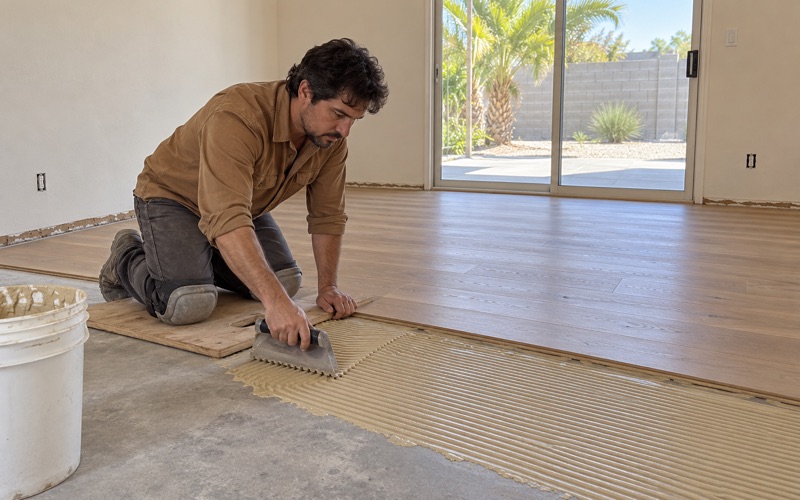
Worker troweling adhesive onto a concrete slab ahead of engineered oak planks in a Buena Park house.

Engineered Hardwood Flooring

Engineered hardwood chosen for its wear layer and core, tested against the slab before it is ordered, and installed nail-down, glue-down or floating.

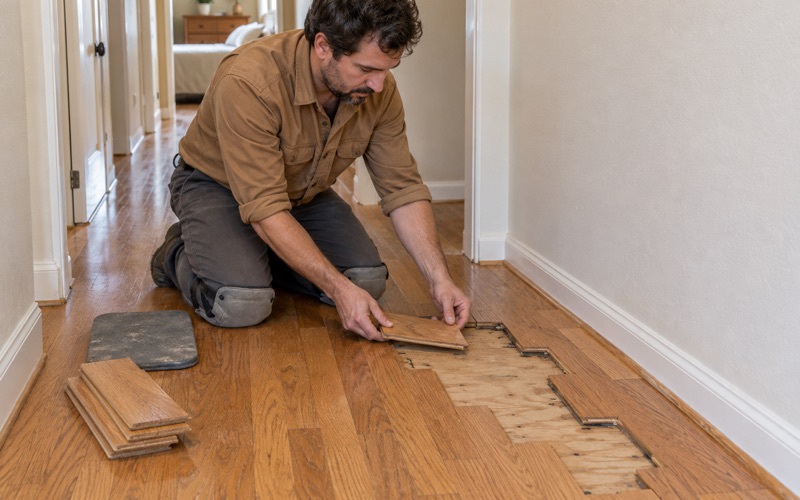
Worker lowering a replacement oak strip into a staggered lace-in repair in a Buena Park hallway.

Hardwood Floor Repair

Board replacement, weave-in repairs, squeak and gap fixes, and stain and pest damage repaired so the patch disappears into the floor around it.

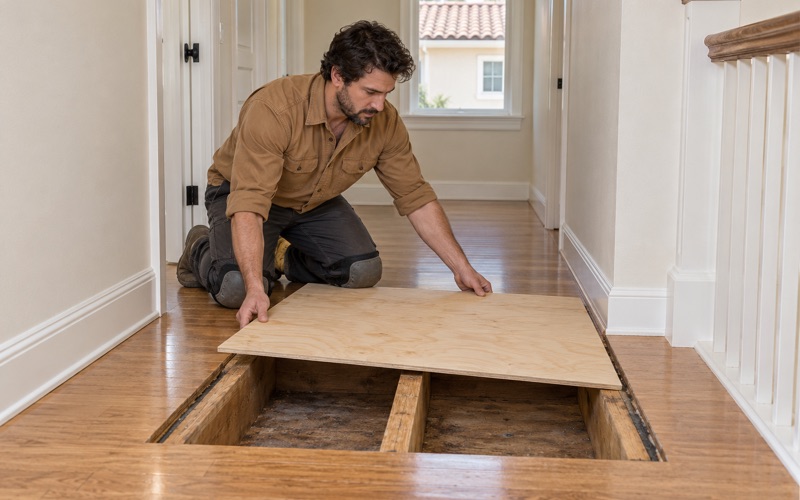
Worker setting a new plywood subfloor panel into an opened floor before new oak goes down.

Subfloor Repair

Soft, bouncy or sagging floors traced to the subfloor and framing underneath, repaired properly, and finished with matching flooring on top.

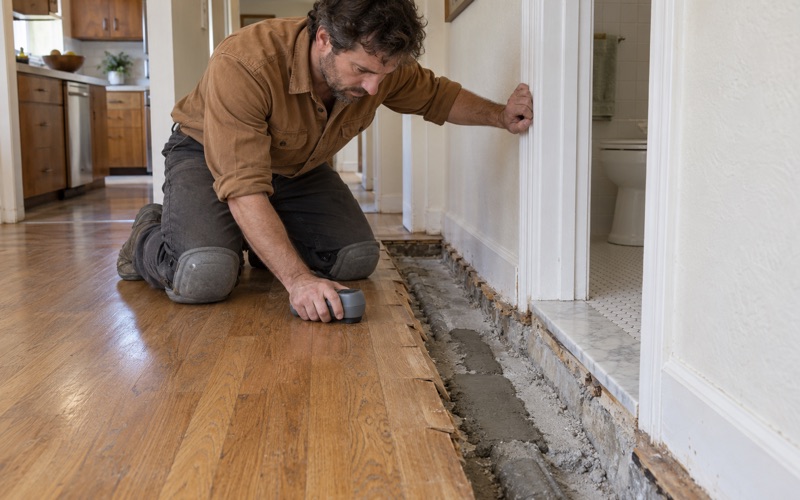
Worker checking cupped oak boards beside a patched slab-leak trench in a Buena Park kitchen hallway.

Water Damaged Hardwood Floor Repair

Cupped, stained and buckled hardwood rebuilt after a slab leak or appliance flood, once the floor is dry, with documentation for the insurance claim.

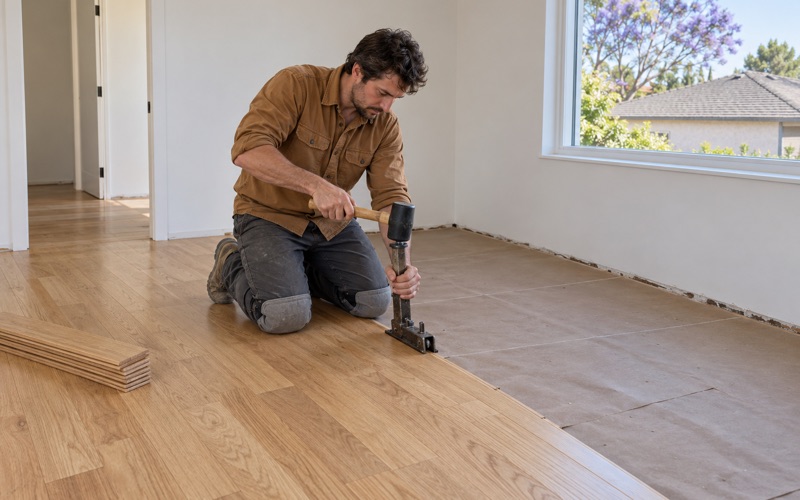
Worker nailing a solid white oak board through its tongue with a flooring nailer in a Buena Park house.

Solid Hardwood Flooring

New solid oak, hickory and maple floors nailed over a checked subfloor, finished on site or prefinished, and built to be sanded again for decades.

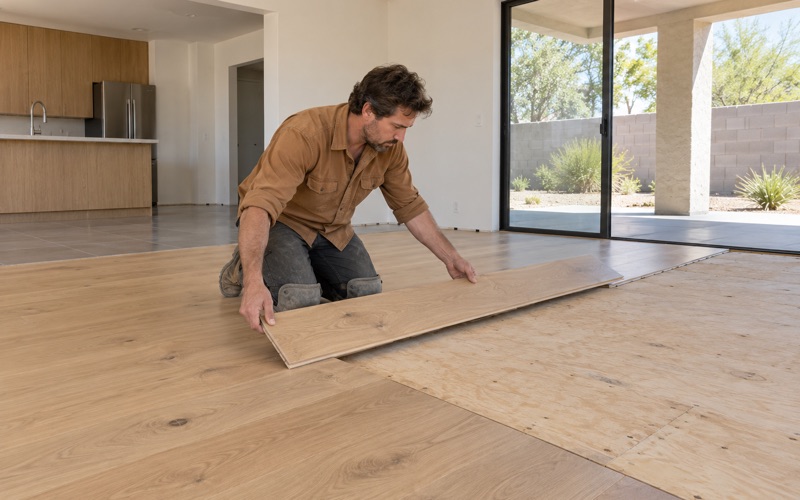
Worker lowering a long wide white oak plank into place in an open-plan room in Buena Park.

Wide Plank Hardwood Flooring

Wide plank, herringbone and chevron hardwood floors, chosen for stability, laid out from the main sightline and finished to show off the grain.

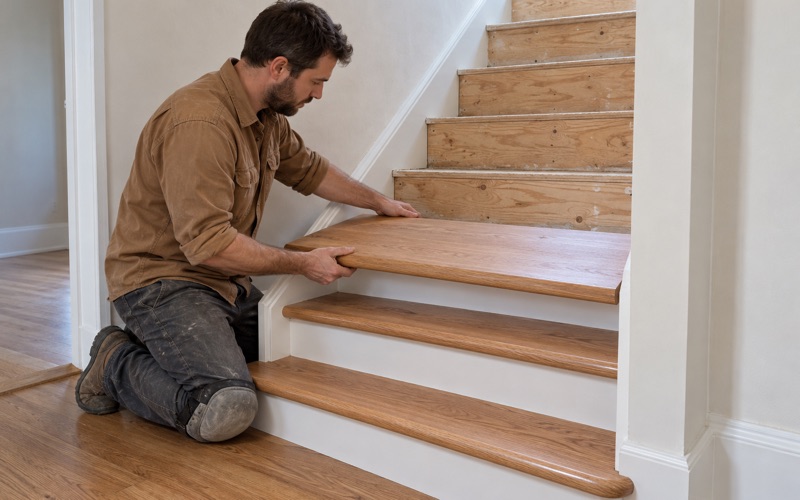
Worker setting a new oak retro tread with a bullnose front edge onto a stair in a Buena Park townhouse.

Hardwood Stair Treads

Carpeted or worn stairs rebuilt with new hardwood treads, risers and nosings, each step fitted by hand and priced on its own line.

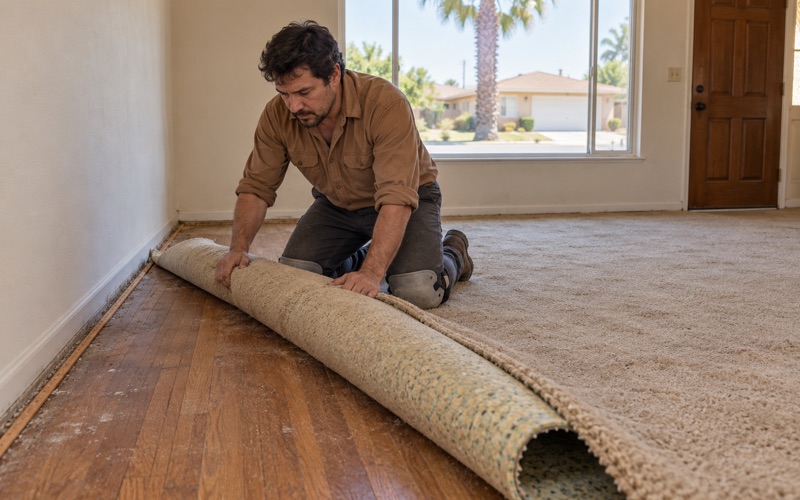
Worker rolling back old carpet to uncover the original red oak floor in a Buena Park tract house.

Replace Carpet With Hardwood

Carpet pulled, the floor underneath assessed, and either the original oak restored or new hardwood laid with clean transitions to every room.

Two Decades of Wood Flooring Work

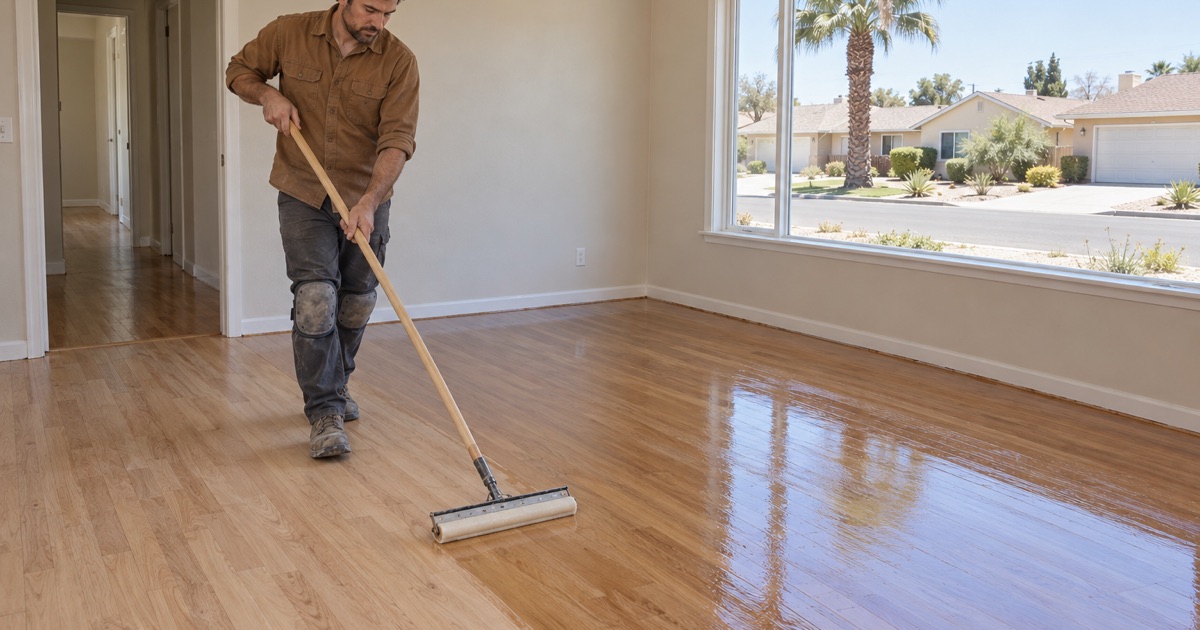
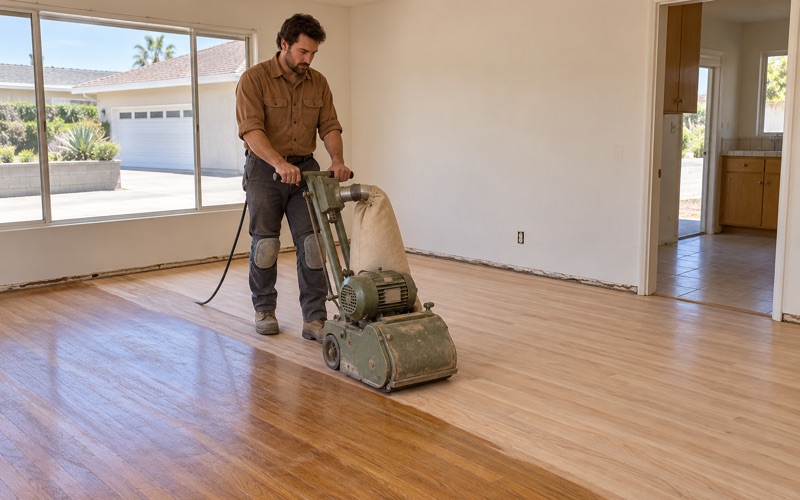
Worker walking backwards while coating a sanded red oak strip floor in a 1950s single-story house in Buena Park.

20+ Years on Hardwood Floors

We have been sanding, repairing and installing wood floors for more than twenty years, long enough to have seen most of the ways a floor fails and what each failure looks like before it gets expensive. That experience is why we diagnose first, price second, and tell you plainly when a floor is worth saving rather than replacing.

Why Choose Buena Park Wood Flooring

Board-by-Board Oak Assessment

Every oak strip floor found under carpet in a postwar Buena Park tract house gets walked, probed and checked board by board before we price it, so a floor that needs a few boards woven in gets restored rather than quoted for full replacement the way a crew selling new flooring would price it.

Moisture Readings on Paper

No wood gets ordered until we have measured moisture in the existing boards and, on concrete, tested the slab itself, so engineered planks glued down over a damp slab are not left to cup within a season rather than being installed on a guess and blamed on the weather afterward.

Never does a wood floor finish go down here unless it meets the 275 g/L wood-coating limit in SCAQMD Rule 1113, so what we apply in Buena Park is legal to apply in the South Coast air basin, rather than a solvent-heavy product bought out of the region and spread anyway.

Old Adhesive and Paint Checked First

Before a sander touches old parquet or a 1950s tile floor, the adhesive underneath is treated as a possible asbestos question and houses built before 1978 get lead-safe work practices, so a floor from the city’s postwar boom does not become a contamination problem rather than being ground up the way a hurried crew would.

Stair Work Priced Step by Step

Each tread and riser gets its own line on the written estimate, so a staircase that needs new nosings and two replaced treads is priced for exactly that rather than folded into a square-foot number that hides the most labor-heavy part of any hardwood floor job.

When Something Goes Wrong With the Floor

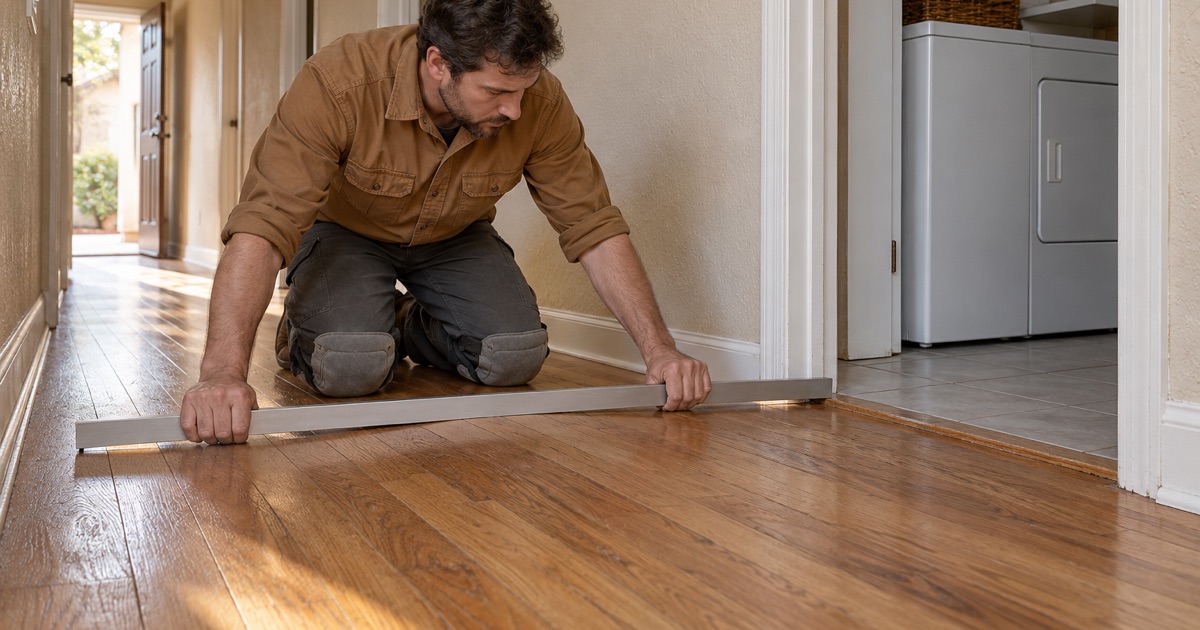
Worker laying a long straightedge across a crowned section of oak floor to show the hump in a Buena Park hallway.

Cupping, Crowning and Buckling in Hardwood

Cupping means the board edges have risen above their centers, crowning is the reverse, and buckling is a floor lifting clear of the subfloor. We read each one as a moisture signal, check the boards and subfloor with a wood moisture meter, and find the source before sanding anything, because a cupped floor sanded flat while still wet will crown once it dries.

Gaps Opening Between Hardwood Boards

Small seasonal gaps in solid hardwood are normal as the wood gives up moisture in dry months, but wide or growing gaps usually mean the floor went in too wet or skipped acclimation. We measure moisture content before deciding whether to wait out a season, fill the gaps, or relay a section, so you are not paying to fill board gaps that open again next winter.

Soft Spots Near the Bathroom, Kitchen or Door

A floor that gives underfoot beside a toilet, tub, dishwasher or exterior door is usually describing the subfloor rather than the finish boards. We lift a board or two, check the plywood subfloor and the floor joist beneath it for rot, and price the repair from what we actually find, so new hardwood is never laid over a subfloor that is still failing.

Slab Leak Warm Spots Under the Boards

A warm patch in the floor, or water seeping between boards with no visible source, often points to a slab leak in a hot water line under the concrete. Leak detection and the repair belong to a plumber first; we assess the floor alongside that work so you know early which boards are lost and which can stay.

Dishwasher, Water Heater and Supply Line Leaks

A slow drip from a dishwasher, water heater or toilet supply line can soak into hardwood for weeks before anyone notices cupping or dark edges. We take moisture readings across the wet area and well beyond it to map how far the water traveled, then decide which boards can dry in place and which must come out, rather than replacing only the ones that look bad today.

Termite and Beetle Damage in Wood Floors

Drywood termites leave small piles of pellet-shaped frass and can hollow a floorboard while its surface still looks sound, while powderpost beetles leave fine powder and tiny round exit holes. We probe and replace damaged boards once the pest company has finished, and we schedule any refinish after termite fumigation rather than before, since tenting, furniture moves and foot traffic are hard on a fresh finish.

Pet Urine Stains and Lingering Odor

Pet urine soaks past the finish into the wood fibers, turning oak dark gray or black and leaving a smell that comes back on every humid day. Light marks sometimes sand out, but deep black stains usually mean replacing those boards and weaving new ones into the pattern, and we tell you which before sanding starts so the estimate does not change halfway through.

Engineered Veneer Peeling or Separating

When the top wood layer of an engineered floor bubbles, lifts or peels away from its core, the cause is usually moisture, a failed glue bond, or an earlier sanding that went too deep. We check whether the damage is local or spread across the floor, because a few delaminated planks can be replaced from spare stock while widespread failure means the product itself has given out.

Scratched, Peeling or Sticky Polyurethane

A finish that scratches the week it goes down, peels in sheets, or stays tacky for days usually points to incompatible coats, contamination such as furniture polish, or finish laid too thick in cool weather. We find the cause first, because a screen and recoat over a contaminated floor simply peels again, and sometimes a full sand to bare wood is the only lasting fix.

Oak Turned Gray, Black or Orange

Gray oak usually means the finish has worn through and bare wood has weathered, black patches point to water or urine reacting with the tannins in oak, and orange is the amber of an aging oil-based coat. Each needs a different answer, from a full refinish with a waterborne polyurethane that stays clearer, to board replacement where the stain runs deep.

Bringing Back the Floor You Already Have

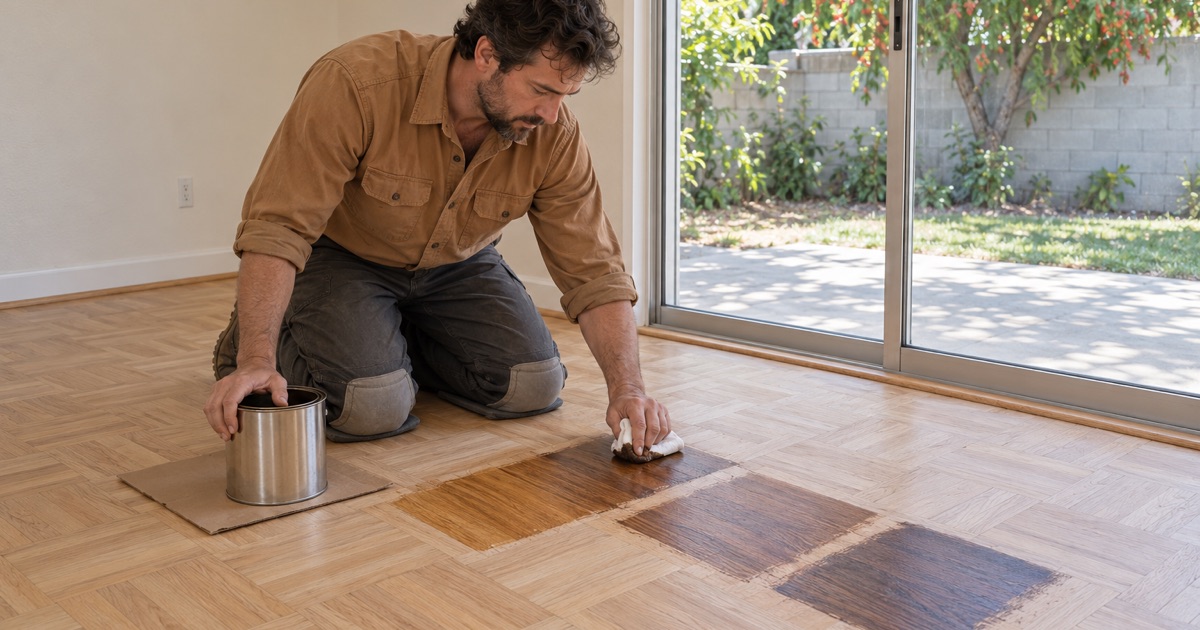
Worker wiping stain test patches onto sanded oak parquet in a Buena Park dining room.

Finding Hardwood Under Carpet

Many carpeted houses from the 1950s and 1960s have oak strip flooring underneath, and the easiest check is lifting a corner of carpet inside a closet or beside a floor vent. We confirm what is there, how thick it is, and whether it has been sanded before, so you know you have a floor worth restoring before you pay to tear out the carpet.

Tack Strip Holes, Staples and Pad Glue

Pulling carpet leaves a ring of carpet tack strip nail holes around each room, rows of staples from the pad, and sometimes pad glue stuck to the old finish. We pull every staple, fill the tack strip holes with a color-matched filler, and scrape the glue before sanding, because sandpaper loads up with adhesive and leaves gouges instead of a flat floor.

Full Sand and Refinish or Screen and Recoat

A screen and recoat lightly abrades the existing finish and adds a fresh coat, which works when the floor is dull but the wood underneath is not worn through. Once scratches reach bare wood or the color needs to change, the floor needs a full sand with a drum sander, edger and orbital sander through a proper grit sequence, and we tell you which one yours needs.

How Many Times Hardwood Can Be Sanded

Solid hardwood can usually be sanded several times over its life, limited by how much wood remains above the tongue, and we check that before quoting a full refinish. Engineered hardwood depends entirely on wear layer thickness: a thick layer can take a sanding or two, a thin veneer may only take a screen and recoat, and some cannot be sanded at all.

Restoring, Patching or Lightening Old Parquet

Old parquet can often be saved by regluing loose blocks, patching missing ones with matched wood, and sanding the whole floor lighter than its original dark stain. Because older parquet adhesive can contain asbestos, we treat the glue underneath as something to test before any block is lifted or sanded, rather than finding out after the dust has spread through the house.

Fir and Oak Floors Under Old Paint

Some older houses have Douglas fir or oak floors that were painted over decades ago, usually in bedrooms, back rooms or enclosed porches. Paint in a house built before 1978 is treated as possibly containing lead, so we follow lead-safe practices while stripping and sanding it, and we tell you up front that softer fir shows dents and wear more readily than oak.

Choosing a Stain Color That Matches the Sample

A stain that looks right on a store sample rarely looks the same on your floor, because red oak, white oak and fir each take color differently and the final sanding grit changes how deep it soaks in. We lay test patches on your own sanded floor, so you choose from real wood rather than a printed chip and any blotchy stain shows up early.

Waterborne and Oil-Modified Finishes Under South Coast Rules

Waterborne polyurethane dries clear and fast with less odor, while oil-modified polyurethane ambers over time and cures more slowly. In the South Coast air basin, SCAQMD Rule 1113 caps wood coatings at 275 g/L of volatile organic compounds, so some finishes sold elsewhere are not legal to use here, and we choose among compliant waterborne, oil-modified and hardwax oil finishes.

Staying Home Through a Hardwood Refinish

Most families can stay home during a refinish when the rooms are done in sections and the finish is chosen for a shorter cure. You get a written schedule showing when each room can take socks, then shoes, then furniture, and when rugs can go back down, so nobody sets a table leg into finish that has not hardened yet.

Refinishing Before You Sell or Move In

Refinishing hardwood before a house is listed, or before your furniture arrives in a new one, is easiest while the rooms are empty and nobody has to live around the work. We schedule around escrow and move-in dates, and an empty house lets us sand every room in one continuous pass with no furniture to shift and no one walking on wet finish.

New Wood Floors and Stairs

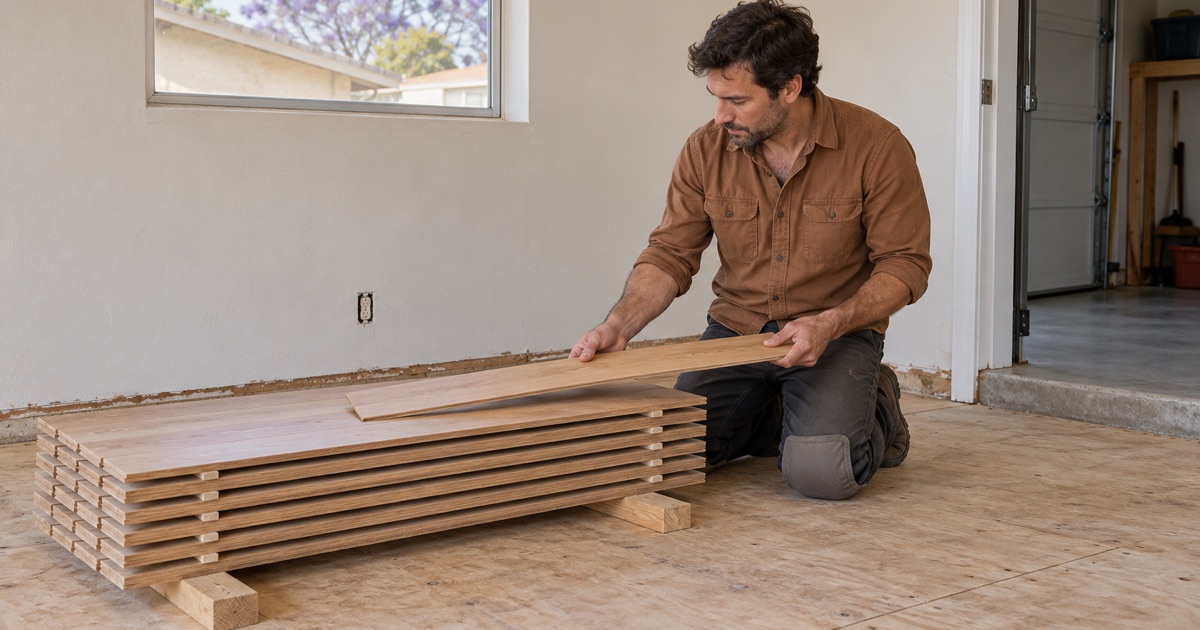
Worker lifting a board from an acclimating stack of new white oak flooring in a Buena Park house.

Solid Versus Engineered Hardwood

Solid hardwood is one piece of wood through its whole thickness and can be sanded many times, while engineered hardwood is a real wood wear layer over a plywood or composite core that moves less with moisture. We generally recommend solid where it can be nailed to a wood subfloor, and engineered where the floor sits on concrete or needs to stay dimensionally stable.

Engineered Wood Over a Concrete Slab

Concrete holds moisture long after it looks dry, and a damp slab is the most common reason a glue-down engineered floor cups or lets go. We run an ASTM F2170 in-situ relative humidity test or a calcium chloride moisture test before ordering material, record the readings, and add a vapor retarder or moisture-control adhesive when the results call for one.

Removing Glued-Down Flooring and Adhesive

Taking up old glue-down flooring leaves adhesive that has to be scraped or ground off before anything new can bond to the slab. In older houses that residue may be black mastic under 9x9 tile, which can contain asbestos, so an asbestos survey comes before any grinding, rather than turning a flooring job into an abatement problem halfway through.

Replacing Carpet or Tile With Hardwood

Switching from carpet or tile to hardwood means dealing with height changes at doorways, transitions into other rooms, and whatever subfloor or slab sits underneath. We plan reducer strips and T-molding where the new floor meets the old, check that doors still clear, and take tile down to a flat, clean substrate so the hardwood does not telegraph old grout lines.

Wide Plank, Herringbone and Chevron Floors

Wide plank flooring shows more grain and makes a room feel calmer, but wider boards move more with moisture, so we lean toward engineered wide plank on a slab. Herringbone and chevron patterns take more layout time and more cutting waste, and we snap the centerline off the room’s main sightline so the pattern reads straight from the front door.

White Oak, Red Oak, Hickory and Maple Hardness

The Janka hardness rating measures the force it takes to press a steel ball into a species, and it is the simplest way to compare dent resistance. Hickory rates harder than maple and both oaks, and white oak edges out red oak, while maple is hard but can take stain unevenly, so we help you weigh hardness against grain, color and how each room is used.

Wear Layer Thickness on Engineered Planks

The wear layer is the real wood on top of an engineered plank, and its thickness decides whether the floor can ever be sanded and refinished. A thin veneer may never take a full sanding, while a thicker wear layer can be refinished at least once, so we show you the cut edge of each product before you commit to it.

Nail-Down, Glue-Down and Floating Installation

Nail-down installation fastens boards to a wood subfloor with cleat nails or flooring staples, glue-down bonds engineered planks directly to concrete, and a floating installation locks planks together over an underlayment without fastening them. We choose the method for the subfloor in front of us and follow NWFA installation guidelines for fastener spacing and the expansion gap left at every wall.

Hardwood Stair Treads, Risers and Nosings

Stair treads, risers and nosings take more hand work than any other part of a floor, since each step is cut, fitted and finished on its own. Stairs appear on our estimates as a count of treads and risers with a price for each, and we match the nosing profile to the new floor so the landing and the top step read as one surface.

New Hardwood in a Kitchen Remodel

When hardwood goes in during a kitchen remodel, the order matters: running the floor under the cabinets or stopping at them changes cost now and flexibility later. We coordinate with your remodeler on when the floor goes down, protect it through the rest of the work, and floor the dishwasher opening so the appliance can come out later without a ledge.

Rentals, Claims, Co-ops and Older Houses

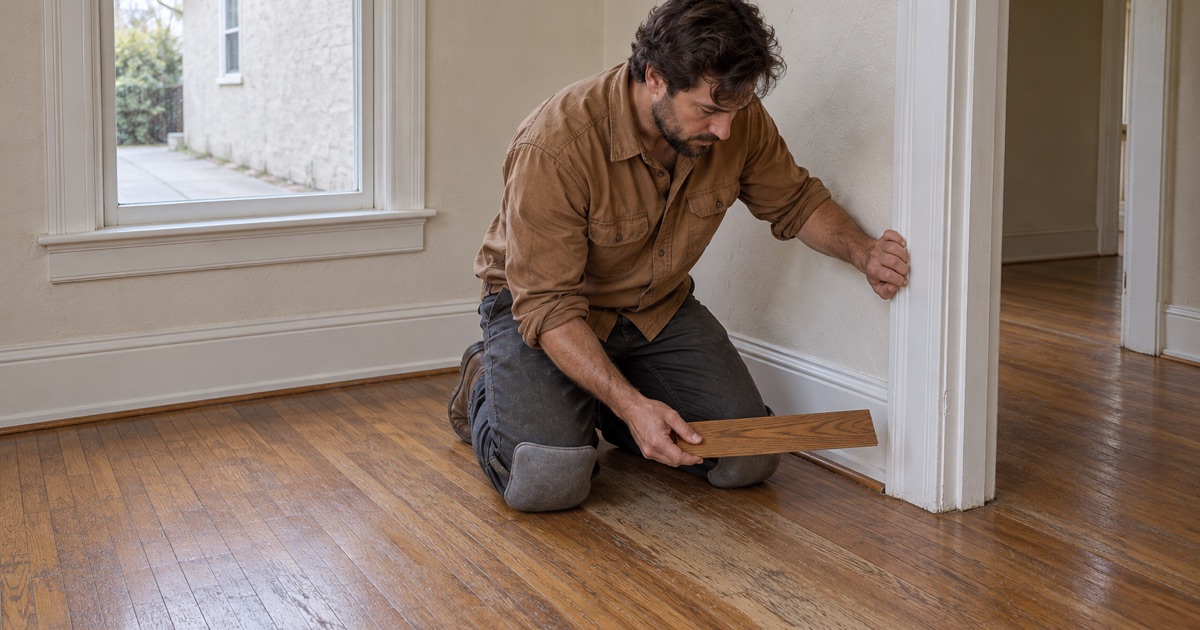
Worker holding a salvaged oak board beside an older strip floor to match its color and width in a Buena Park house.

Rental Turnover Floor Work Between Tenants

Between tenants, a landlord usually needs worn floors refinished or damaged boards replaced inside a tight vacancy window. We schedule the work to get the unit back on the market quickly, and because half of Buena Park’s renter households live in buildings of five or more units, we can work one apartment at a time without disturbing the rest of the building.

Normal Wear and Tear Versus Floor Damage

California Civil Code 1950.5 lets a landlord deduct from a security deposit for damage beyond normal wear and tear, but not for ordinary aging. Light traffic paths and a dulled finish generally read as wear; deep pet stains, gouges and water damage from neglect are more likely damage, and our written estimate describes each area so either side can point to it.

Hardwood Rebuilds After the Drying Crew Leaves

After a water damage crew has dried the house, the floor still has to be rebuilt, and that is where we come in. We confirm with moisture readings that the wood and subfloor are truly dry, photograph the damage, and write an itemized estimate an adjuster can review, since 10 CCR 2695.9 expects replaced flooring to reach a reasonably uniform appearance.

Floor Repair After a Slab-Leak Reroute or Repipe

Once the plumber has repaired the slab leak, rerouted the line, or finished a repipe, the floor over the repair still has an open hole and often a wide damp area around it. We check the slab is dry, patch the concrete opening flat, and weave matching boards back in, or refinish the whole room so the repair does not show as a new rectangle.

Flooring Approvals in Condos, Co-ops and 55+ Communities

Condos and co-ops usually require approval before a flooring change, and California Civil Code 4760 lets an owner alter their own unit subject to the association’s governing documents. Many buildings and 55+ communities, Laguna Woods Village among them, set alteration standards that include acoustic underlayment rated by delta IIC, and we supply the product data your board asks for.

Asbestos Tile, Parquet Adhesive and Black Mastic

Houses built before 1980 can hide 9x9 asbestos floor tile, black mastic or older parquet adhesive under the current floor. In the South Coast, SCAQMD Rule 1403 governs how asbestos-containing material is surveyed and removed during a renovation, so we arrange a survey before any of it is disturbed and leave removal of confirmed material to a licensed abatement contractor.

Lead-Safe Hardwood Sanding in Pre-1978 Houses

The EPA Renovation, Repair and Painting rule applies to work that disturbs paint in pre-1978 housing, which covers a large share of Buena Park’s homes. When a floor, stair or baseboard carries old paint, we contain the work area, use a dustless sanding system, and clean and check the rooms before the family moves back in.

Floor Problems a Home Inspection Turns Up

A home inspection report may flag cupping, soft spots, termite damage or loose boards without saying what any of it costs to fix. We inspect those specific items, write an itemized estimate a buyer or seller can bring to the negotiation, and separate what needs fixing before closing from what can safely wait.

Safer Wood Floors for Aging in Place

As people get older, a slippery finish, a loose stair nosing, or a lip at a doorway becomes a real fall risk. We can choose a lower sheen level and a finish with more grip, secure loose treads and nosings, and replace raised thresholds with low reducer strips, so the floor stays easy to walk without giving up the look of wood.

Areas We Serve

Buena Park Wood Flooring provides wood-flooring throughout the greater Buena Park area, with the same crews and the same standards on every job.

Good to know

Frequently Asked Questions

How is a hardwood floor job priced?

Sanding, refinishing and new installation are priced by the square foot of floor, while stairs are priced per tread and per riser and repairs are priced by the boards and subfloor involved. Every estimate is itemized in writing, so you can see what each room, each step and each repair costs before you decide anything.

How long does a full sand and refinish take?

A typical refinish of a few connected rooms takes a few working days: sanding and edging first, then stain if you want color, then several coats of finish with drying time between them. Cure time after the last coat depends on the finish, and we give you a written schedule for when each room can take foot traffic and furniture.

Does a flooring contractor need a license in California?

Flooring work falls under the Contractors State License Board's C-15 flooring and floor covering classification. Business and Professions Code 7048 exempts only minor jobs under $1,000 that need no building permit, a limit raised by AB 1170 effective January 1, 2026, and it does not cover anyone who advertises as a contractor. You can look up any license number on the CSLB website before you hire.

Can you match new boards to my existing floor?

Usually, yes. We identify the species, board width and thickness, then weave replacement boards into the existing pattern and refinish the area so it blends. On an insurance claim, 10 CCR 2695.9 calls for replaced items to reach a reasonably uniform appearance, which is why a small repair sometimes means refinishing the whole room.

Which hardwood holds up best to kids and dogs?

Harder species such as hickory and white oak resist dents better than softer ones, and the Janka hardness rating is the standard way to compare them. A lower sheen and a wire-brushed or natural grain also hide scratches far better than a glossy, dark, smooth floor does, whatever the species.

What should we do to get the house ready?

Clear small items, rugs and anything fragile from the rooms being worked on, and plan where pets will stay while sanding and finishing are underway. We walk the job with you beforehand to agree which rooms go first, where the dust barriers go, and how you will get in and out of the house.

Can hardwood go in a bathroom or laundry room?

Solid hardwood is a poor choice where water sits on the floor, because standing water and repeated splashes swell the boards and break down the finish. Engineered hardwood with a well-sealed finish can work in a powder room, but for a full bath or laundry we usually recommend running the wood to the doorway and stopping there.

Does the city require a permit for a new wood floor?

Buena Park's Building Division forms and handouts do not address flooring or interior finish work at all. Replacing finish flooring is usually treated as cosmetic, but structural work such as replacing floor joists or a large section of subfloor can be a different matter, so we check with the Building Division whenever a job reaches the framing.

Is there any help paying for new floors in Buena Park?

The City of Buena Park runs a Home Improvement Loan Program that lists new flooring among its eligible improvements, at one percent interest with payments deferred. It is limited to owners at or below 80 percent of the county median income, and the city's Economic Development office takes the pre-application, so contact them first and we can price the flooring portion in writing.

How should we care for a newly refinished floor?

Put felt pads under every chair and table leg, keep rugs off until the finish has fully cured, and clean with a barely damp microfiber mop rather than a steam mop or a wet one. Grit is what dulls a finish, so a doormat at each entry and regular dry dusting do more for the floor than any polish.

Ready to Get Started?

Request a free quote today and we'll get back to you fast.