Buena Park Wood Flooring has installed solid hardwood flooring in Buena Park, CA for 20+ years, serving surrounding cities including La Palma, La Mirada, Cypress, Cerritos, Stanton. We lay new solid oak, hickory and maple over sound wood subfloors, and we can finish it on site in the stain and sheen you choose or install a prefinished floor that is ready to use the same day.
Solid hardwood is one piece of wood through its full thickness, which is why it can be sanded and refinished again and again over its life. It is the floor many of the older houses in this area were built with, and it remains the longest-lived wood floor you can buy when it goes over the right subfloor.
The right subfloor is the part that matters most. Solid wood expands and shrinks with moisture, so before we order anything we check the subfloor for soft spots, flatness and moisture, and we confirm solid is the right choice for your house rather than engineered.
Choosing a Species
Red Oak and White Oak
Red oak is the classic American hardwood floor, with a warm pink-brown tone, open grain and a long record in houses from the middle of the last century. White oak is slightly harder on the Janka hardness rating, has a tighter grain and cooler color, and takes both light natural finishes and dark stains evenly, which is why it has become the most requested species for new floors.
When new solid flooring has to sit beside an existing floor, the species of the old floor usually decides the new one. Most floors from the 1950s and 1960s are red oak strip, and matching it with red oak of the same width lets the old and new floors be sanded and finished together as one surface.
Hickory and Maple
Hickory is much harder than either oak and has strong color variation from pale to dark in the same board, which hides wear well and suits a rustic look. Maple is hard, pale and smooth, giving a clean contemporary floor, though it takes dark stain unevenly, so we usually recommend it in a natural or clear finish.
Hardness is only part of how a floor wears. A dog’s nails or a dropped pan will mark any species, and the finish, the sheen and the amount of color variation in the boards often decide how visible that wear is far more than the Janka number does.
Solid Hardwood in Older Houses
Extending an Existing Oak Floor
When a remodel opens a wall, adds a room, or removes carpet from part of a house, the new solid hardwood often has to join an existing oak floor. We lace the new boards into the old at the joint rather than stopping at a threshold strip, then sand and refinish the old and new together so the color and sheen match across the whole space.
Replacing a Floor That Cannot Be Saved
Some older solid floors have been sanded too many times, damaged by water or pests across a whole room, or covered in patches that no longer match. When that is the case, we take the old boards up, repair the subfloor, and install new solid hardwood, keeping the same species and width if you want the house to keep its original character.
Installation Over a Wood Subfloor
Nail-Down Installation Done Right
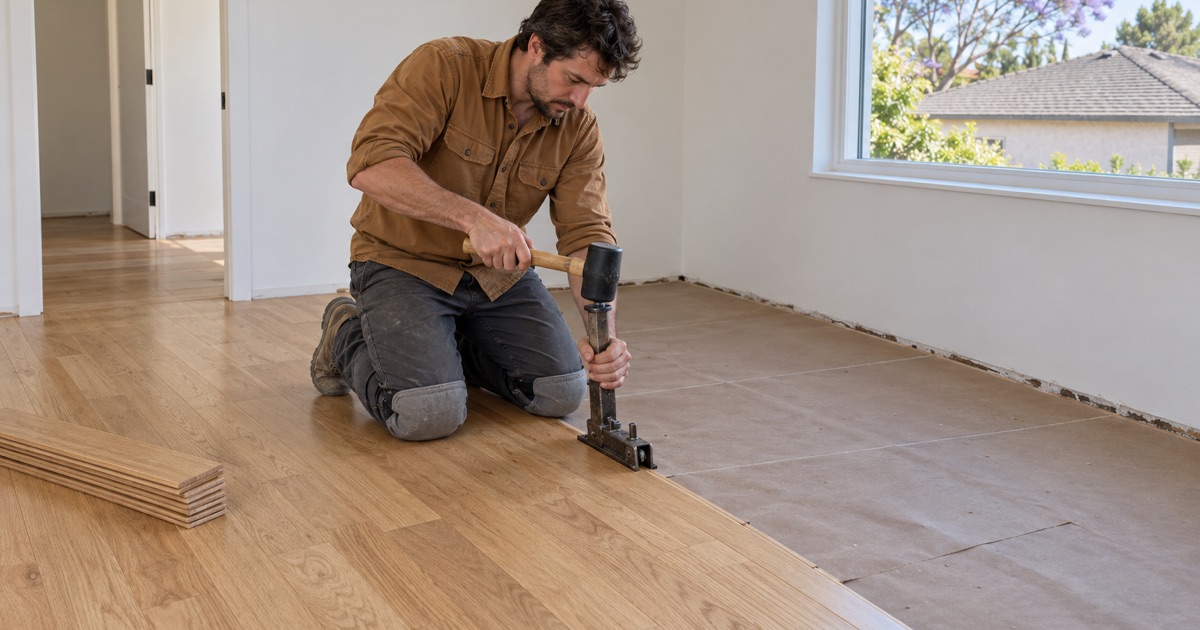
Solid hardwood is installed by nail-down installation, with cleat nails or flooring staples driven through the tongue of each board at an angle into the subfloor. We follow NWFA installation guidelines for fastener spacing and board layout, stagger the end joints so no pattern repeats, and leave an expansion gap at every wall that the baseboard or shoe molding covers.
The first rows along the starting wall are face-nailed and set perfectly straight, because every other row follows them. A crooked first row shows up as tapering gaps across the room, and it cannot be corrected once the rest of the floor is down.
Subfloor Checks and Acclimation
Before installation, the plywood subfloor is checked for flatness, loose areas and soft spots, and repaired where needed. The hardwood is delivered early to acclimate, and we measure its moisture content against the subfloor with a wood moisture meter, installing only when the two are close enough that the floor will not shrink into gaps or swell into cupping.
Site-Finished or Prefinished
Site-Finished Solid Hardwood
Site-finished hardwood is installed raw, then sanded flat, stained if wanted, and coated in place. The result is a perfectly flat surface with no beveled edges, and you can choose any stain color and sheen level. It takes longer and the finish must cure in the house, so we leave a written schedule for when each room can be used.
Prefinished Solid Hardwood
Prefinished boards arrive with a factory finish that is fully cured, so rooms can be used right after installation. The edges are usually slightly beveled, which hides small height differences between boards. The tradeoff is color choice, limited to what the manufacturer offers, and a first refinish that takes a little more sanding to remove the bevels.
Finishes and Air Quality Rules
Finishes Legal in the South Coast
For site-finished floors, we choose finishes that comply with SCAQMD Rule 1113, which caps wood coatings at 275 g/L of volatile organic compounds in the South Coast air basin. That still leaves a wide choice, from clear waterborne polyurethane to warmer oil-modified polyurethane and penetrating hardwax oil finishes, and we explain how each wears and ages before you choose.
The finish also decides how the floor will be maintained. A polyurethane film is cleaned and eventually screened and recoated, while a hardwax oil is refreshed with more oil in worn areas. We leave written care instructions for the finish you chose, along with the cure schedule for when rugs and furniture can return.
- 20+ Years in Wood Flooring
- Itemized Written Estimates
- Lead-Safe Sanding